
//
Accurate sound measurement is at the heart of workplace safety, environmental monitoring, and regulatory compliance. When your sound level meter is properly calibrated, you are not just collecting data; you are protecting employees, avoiding compliance issues, and maintaining a reputation for operational excellence.
This guide breaks down what sound level meter calibration means, the specific tests involved in ANSI S1.4 compliance, and why professional calibration is critical to reliable acoustic measurements.
//
You rely on your sound level meter to make decisions about hearing protection. Over time, microphones degrade. Humidity attacks the diaphragm.
Electronics drift. Equipment calibration resets your device so it matches a known standard.
We see this often. A safety manager or Industrial Hygienist sends us a meter that “seems fine.” We put it on the test bench, and it reads 2 dB low. That difference changes a work zone from safe to hazardous.
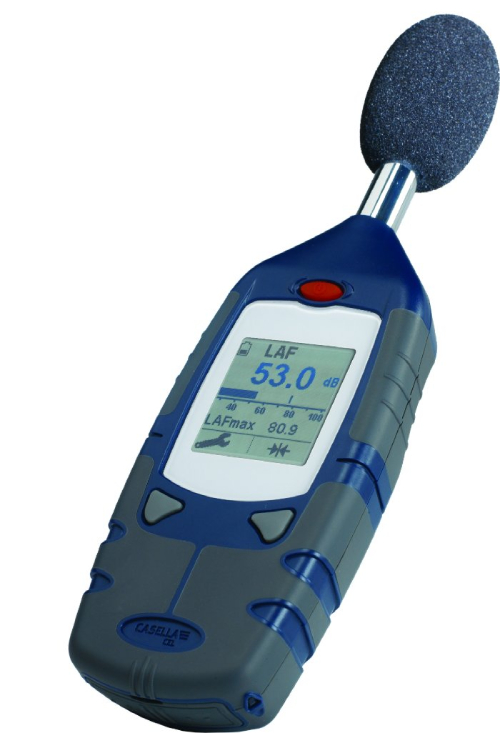
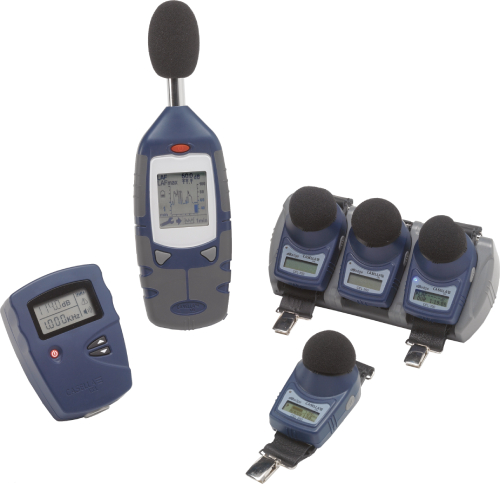
We handle a wide range of acoustic devices. Our technicians test sound level meters, noise dosimeters, and acoustic calibrators. We do not just put a sticker on it. We test the physics behind the measurement.
//
We follow a rigorous testing protocol. Your equipment must meet manufacturer specifications and international standards like ANSI S1.4 and IEC 61672.
Here is what we check during the service:
- Sound Pressure Level: We verify the unit reads the correct decibel level at a specific reference point, usually 114 dB at 1 kHz.
- Frequency Response: We test how the microphone handles low bass tones versus high-pitched squeals. The meter must react evenly across the spectrum.
- Linearity: We check if the meter stays accurate as the volume gets louder. It must track changes perfectly from quiet to loud.
- Time Weighting: We confirm the "Fast" and "Slow" response settings react at the correct speed.
//
Not all calibration shops are equal. Some places just check one point and send the bill. You need an Accredited Laboratory that follows ISO/IEC 17025:2017 standards.
This accreditation proves our competence. It means an outside body audits our methods, our math, and our reference standards.
When you send your unit to us, you receive NIST-traceable results. This creates a chain of evidence. It links your specific instrument back to national standards held by the National Institute of Standards and Technology.
If you ever face a legal challenge regarding your noise data, this chain of evidence is your best defense.
//
We operate from Clearwater, but we serve many countries throughout the world. We know that when you ship us a unit, you lose a tool you need for your job. You cannot wait weeks for it to return.
We prioritize fast turnaround times. Our lab runs efficiently, so you get your gear back in the field. We handle the shipping logistics and keep you updated. We treat your equipment like it belongs to our own neighbors.
If we find a problem, we can try to fix it. This saves you from sending a unit to one place for calibration and another for repair. We handle it all here.
//
What is acoustics calibration?
It is the process of comparing a sound measuring instrument against a known reference standard. A technician verifies that the device measures sound pressure levels accurately across different frequencies and volumes according to manufacturer specifications.
How often should I calibrate my sound level meter?
Most standards and manufacturers recommend annual calibration. However, if you use the meter in harsh environments with high dust or humidity, you might need service every six months to maintain accuracy.
What is the difference between Class 1 and Class 2 meters?
Class 1 meters are precision-grade instruments used for laboratory or enforcement work. Class 2 meters are general grade instruments used for basic noise surveys. Class 1 meters have tighter tolerance limits than Class 2.
Do I need to send my field calibrator too?
You should calibrate your field calibrator (the device you put on the microphone before a survey) annually as well. If your field check device is wrong, your daily field verifications are invalid.
Get Your Equipment Verified Today
//Don’t let bad data shut down your project. Send your sound level meter to a lab that prioritizes precision and speed. We are ready to help you meet your safety goals.
Call CIH Equipment now to start. Let’s get your gear back to work.