
//
If you’ve ever wondered whether that gas monitor beeping in your facility is actually telling the truth, you’re asking the right questions. Industrial hygiene equipment calibration is essentially a reality check for your safety instruments; it’s the process of making sure your equipment measures what it claims to measure, within acceptable limits.
Think of it like checking your bathroom scale against a known weight. If you place a 10-pound dumbbell on it and it reads 8 pounds, you know something’s off. Industrial hygiene calibration works the same way, except the stakes are much higher, and instead of dumbbells, we use certified reference standards that trace back to national measurement institutes.
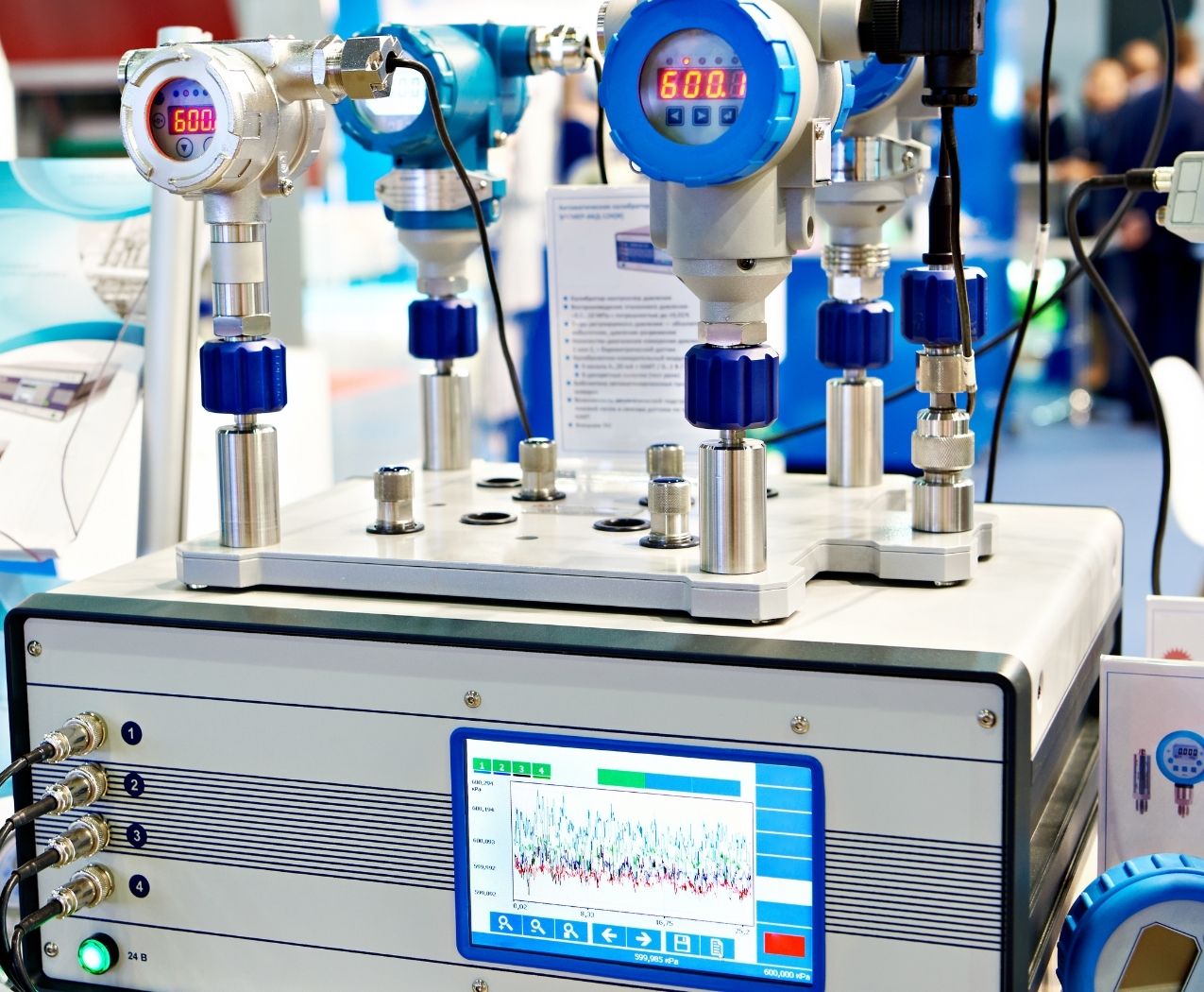
Here’s what actually happens during calibration: A technician takes your instrument and exposes it to known concentrations of gases, specific sound levels, or whatever parameter your device measures. They document how far off your readings are, make adjustments to bring things back in line, and then verify everything’s working correctly. The whole process gets documented in detail, because if OSHA comes knocking, “trust me, it works fine” isn’t going to cut it.
The key distinction many people miss? Calibration isn’t just checking that equipment works; it’s proving it works accurately across its entire measurement range, with documentation that would hold up in court if needed.
//
Let me paint you a picture that keeps safety managers up at night. Your facility’s hydrogen sulfide monitor hasn’t been calibrated in 18 months. It’s been slowly drifting, now reading 30% lower than actual concentrations. Workers trust those readings while working in confined spaces.
Then someone collapses. Suddenly, you’re facing investigations, lawsuits, and the knowledge that proper calibration could have prevented a tragedy.
We’ve heard of incidents where improperly calibrated equipment was a contributing factor, and the patterns are frustratingly predictable. A dust monitor reads low, so respiratory protection seems unnecessary, until workers develop silicosis years later. A noise dosimeter underreports exposure levels by just a few decibels, but those decibels represent the difference between safe exposure and permanent hearing damage.
On the flip side, we’ve also heard about facilities evacuated unnecessarily because an overcalibrated gas monitor triggered false alarms. While this might seem like erring on the side of caution, repeated false alarms lead to complacency. Workers stop trusting the equipment, sometimes ignoring real warnings, a phenomenon safety professionals call “alarm fatigue.”
OSHA doesn’t mess around when it comes to calibration requirements. During inspections, one of the first things compliance officers request is calibration records. Missing or outdated certificates can trigger deeper investigations and citations that start at $15,625 per violation (as of 2024) for serious violations.
But here’s what really gets expensive: If uncalibrated equipment contributes to overexposure incidents, you’re potentially looking at willful violations with penalties up to $156,259 per violation. And that’s before considering potential criminal charges if negligence leads to fatalities.
//
Let’s break down the equipment filling your industrial hygiene toolkit and why each piece needs regular calibration attention.
Your four-gas monitor might be the workhorse of your safety program, but those electrochemical sensors are constantly degrading, literally consuming themselves to provide readings. Oxygen sensors typically last 2-3 years, while hydrogen sulfide sensors might drift significantly after exposure to just a few high-concentration events.
PIDs (photoionization detectors) are particularly finicky. That UV lamp gradually accumulates contamination, causing sensitivity to drop off.
Air sampling pumps seem simple; they just pull air through filters, right? But a pump running at 1.8 liters per minute instead of the required 2.0 means all your calculated exposures are off by 10%. Over an 8-hour sampling period, those errors compound into serious miscalculations.


Modern sound meters are remarkably stable, but their microphones are sensitive to everything from temperature changes to accidental drops. A microphone that’s been knocked around might still produce readings, but its frequency response could be skewed, missing critical high-frequency noise that damages hearing.
Personal dosimeters face unique challenges; they bounce against hard hats, get splashed with coolant, and endure temperature swings as workers move between air-conditioned control rooms and hot production floors. Each of these stresses potentially affects accuracy.
WBGT monitors are actually measuring multiple parameters simultaneously and performing complex calculations. If the wet bulb sensor’s wick dries out or gets contaminated, your heat stress assessments become meaningless. The globe thermometer needs to maintain specific absorption characteristics; even a layer of dust changes how it responds to radiant heat.


WBGT monitors are actually measuring multiple parameters simultaneously and performing complex calculations. If the wet bulb sensor’s wick dries out or gets contaminated, your heat stress assessments become meaningless. The globe thermometer needs to maintain specific absorption characteristics; even a layer of dust changes how it responds to radiant heat.
Radiation detectors present unique calibration challenges because you can’t just create radiation for testing like you can mix calibration gases. These instruments require specialized facilities with radioactive sources, not something you’re doing in-house unless you’re a very specialized operation.

//
Determining calibration frequency isn’t just about following manufacturer recommendations; it’s about understanding how your specific usage patterns and environment affect equipment stability.
Gas monitors used for confined space entry or hot work permits need bump testing before each use and full calibration monthly. Why so often? Because lives literally depend on these readings being accurate. we recommend clients treat this like pre-flight checks for aircraft, non-negotiable and documented every time.
Some facilities push back on daily bump tests, citing time and gas costs. Our response? Calculate the cost of one confined space fatality—legal fees, OSHA fines, increased insurance premiums, and irreparable reputation damage. Daily bump testing suddenly seems like a bargain.


Particulate monitors and air sampling pumps typically handle quarterly calibration well, assuming normal use. But “normal” is key here. If you’re using that pump daily in a dusty environment, or your particulate monitor travels between multiple sites, consider shortening the interval.
I tell clients to track their calibration history. If equipment consistently passes with minimal adjustment, you might have data to support extending intervals. If it regularly needs significant adjustment, that’s your equipment telling you it needs more frequent attention.
Sound level meters and heat stress monitors generally maintain stability for annual calibration cycles. However, don’t confuse this with “set it and forget it.” These instruments still need regular field checks, acoustic calibrators for sound meters, and functionality checks for heat stress monitors.
For critical measurements or legal compliance sampling, I recommend bracketing important measurements with calibration send equipment for calibration both before and after important projects. Yes, it costs more, but it provides bulletproof documentation of accuracy.

//
After twenty years in this field, we’ve seen the full spectrum of calibration providers, from excellent to “how are they still in business?” Here’s how to separate the professionals from the pretenders.
A2LA accreditation (or equivalent ISO/IEC 17025 accreditation) isn’t just a nice certificate for the wall; it’s proof that someone independent has verified the lab knows what they’re doing. But here’s the catch: accreditation is specific. A lab might be accredited for gas monitor calibration but not for sound meters.


Visit the facility if possible. A legitimate calibration lab should welcome your interest. Look for environmental controls, temperature and humidity monitoring, vibration isolation for sensitive instruments, and clean conditions. If they’re calibrating your precision equipment in a dusty warehouse, find another provider.
Ask about their reference standards. How often are they certified? What’s their uncertainty compared to your equipment? A good lab maintains standards at least four times more accurate than what they’re calibrating.
Labs with Certified Industrial Hygienists on staff understand how you actually use equipment in the field. They know the difference between calibrating a monitor for OSHA compliance sampling versus emergency response. This expertise translates into relevant calibration points, appropriate gas selections, and documentation that speaks to real-world applications.


Turnaround time matters, but consistency matters more. A provider promising a two-day turnaround who regularly takes two weeks creates planning nightmares. Get realistic timelines and ask about their on-time performance.
Consider logistics carefully. How do they handle shipping? What protection do sensitive instruments receive? Who’s liable for shipping damage?
//
ISO 17025:2017 might sound like bureaucratic alphabet soup, but understanding it helps you evaluate whether a calibration provider really knows their stuff or just owns expensive equipment.
Unlike general quality standards (like ISO 9001), ISO 17025:2017 specifically addresses laboratory competence. It’s the difference between proving you follow procedures versus proving those procedures actually produce accurate results.
The standard requires labs to participate in proficiency testing; essentially, they receive blind samples and must produce correct results. Failing these tests can result in suspended accreditation. This ongoing verification provides confidence that the lab maintains competence between assessments.


One hallmark of ISO 1702:2017 calibration is measurement uncertainty reporting. Every measurement has some uncertainty; the question is how much. Accredited labs must calculate and report this uncertainty, helping you understand the confidence limits of your calibration.
For example, if your gas monitor is calibrated at 50 ppm with an uncertainty of ±2 ppm, readings between 48-52 ppm could all be “correct” within the calibration uncertainty. Understanding this helps you make informed decisions about safety margins and action levels.
ISO 17025:2017 requires unbroken traceability to national or international standards. It’s like a chain of custody for measurement accuracy. Your instrument is calibrated against the lab’s standard, which was calibrated against a higher standard, continuing up to national laboratories like NIST.
This traceability means your measurements can be legally defended and compared with measurements anywhere in the world, critical for companies with multiple locations or international operations.

//
Having audited hundreds of calibration programs, I see the same mistakes repeatedly. Here are the big ones that can undermine your entire program.
Teams often establish calibration schedules during equipment purchase, then never revisit them. Your new four-gas monitor might need monthly calibration, but after two years of stable performance, quarterly might suffice. Conversely, that particle counter you thought needed annual calibration might drift significantly after six months in your harsh environment.
Review calibration data annually. Look for patterns. Equipment consistently requiring major adjustments needs more frequent calibration. Equipment passing with flying colors might support extended intervals, with documented justification.


Rushing calibration because equipment is needed Monday morning leads to errors and oversights. Proper calibration takes time, for temperature stabilization, multiple test points, and proper documentation. Schedule calibrations during slow periods when there’s no pressure to rush.
Some calibrate precision instruments in loading docks during winter, then wonder why readings seem off in their climate-controlled cleanroom. Temperature, humidity, and vibration all affect calibration quality. If you can’t control the environment, at least document conditions and consider their impact.


Using multiple calibration providers without standardization creates documentation nightmares. One lab reports in different units, another uses different test points, and suddenly you can’t trend performance over time. Standardize your requirements and communicate them clearly to all providers.
Your emergency response monitors need different attention than the equipment used for routine area sampling. Critical safety equipment should get priority scheduling, tighter intervals, and possibly redundant calibration from multiple providers. Risk-based calibration scheduling ensures resources focus where they matter most.

//
How often should industrial hygiene equipment be calibrated?
There’s no universal answer, but here’s a practical approach: Start with manufacturer recommendations, then adjust based on your experience. Gas monitors in daily use need a minimum monthly calibration. Sound meters can go annually if they’re well-maintained and regularly field-checked. Document your reasoning for any interval changes, OSHA will ask.
What's the difference between calibration and bump testing?
Think of bump testing as a quick “are you alive?” check versus calibration’s comprehensive physical exam. Bump testing verifies your gas monitor responds to gas, but doesn’t check accuracy across the full range or make adjustments. Both are necessary; bump tests catch sudden failures, while calibrations ensure ongoing accuracy.
Can we perform calibrations in-house?
For some equipment, yes, if you’re willing to invest in proper standards, training, and procedures. Many facilities successfully perform routine gas monitor calibrations in-house. But consider the hidden costs: standard gas purchases and disposal, technician training time, and maintaining calibration equipment. Sometimes outsourcing is actually cheaper, especially for annual calibrations requiring expensive standards.
What documentation is required for compliant calibrations?
At minimum, you need certificates showing what was calibrated, when, by whom, the results before and after adjustment, and traceability to recognized standards. Keep everything for at least five years, some standards require longer. Pro tip: Electronic storage with backups beats filing cabinets full of fading thermal paper.
How do I know if my calibration provider is qualified?
Check their A2LA accreditation first; it should be current and cover your equipment types. Ask for sample certificates and review them carefully.
Do they make sense? Include all necessary information? Good providers willingly share references and welcome technical questions. If they get defensive about qualifications, that’s your red flag.
What are the consequences of using uncalibrated equipment?
Beyond the obvious safety risks, you’re looking at regulatory fines starting at $15,625 per violation, potential criminal charges if someone gets hurt, inadmissible data in legal proceedings, and destroyed credibility with employees who trust you to keep them safe.
One serious incident linked to calibration failure can cost millions and destroy careers.
Should calibration intervals be adjusted over time?
Absolutely, but base changes on data, not convenience. If equipment consistently passes with minimal adjustment, document this trend and consider extending intervals. If it’s constantly failing or requiring major adjustments, shorten the interval. The goal is to find the sweet spot between safety and efficiency.
What's the importance of measurement uncertainty in calibration?
Measurement uncertainty tells you how much you can trust a reading. If your action level is 50 ppm and your measurement uncertainty is ±5 ppm, a reading of 47 ppm might actually indicate an exceedance. Understanding uncertainty helps you build appropriate safety margins into your decisions and defend those decisions if challenged.
for Hygiene Equipment Calibration Today
//Getting industrial hygiene equipment calibration right isn’t just about checking boxes for compliance; it’s about ensuring the numbers you base safety decisions on reflect reality. Whether you’re protecting workers from toxic gases, excessive noise, or radiation exposure, calibrated equipment serves as your early warning system.
Invest in quality calibration services from A2LA-accredited providers, maintain meticulous documentation, and remember that the cost of proper calibration is negligible compared to the price of getting it wrong. Your workers trust you to keep them safe, and calibrated equipment helps you keep that promise.