
Oil and gas detector calibration is the primary defense against explosive vapors and toxic atmospheric leaks in high-risk environments. CIH Equipment provides NIST-traceable calibration to verify your sensors react to lethal gases before a life-safety incident occurs.
Our laboratory maintains the highest standards for portable gas detectors and fixed monitoring systems, helping you avoid audit failures and equipment downtime.
Precision Calibration for Offshore and Refinery Safety
Oil and gas detector calibration keeps your workforce safe from silent threats like methane and carbon monoxide. Whether you manage an offshore rig safety equipment service in the Gulf of Mexico or handle refinery gas monitor maintenance at the Houston Ship Channel, accuracy is non-negotiable.
Our team in Clearwater, Florida, provides the technical support needed for complex sensors that face exposure to high heat and salt-heavy environmental conditions.
We specialize in LEL detector calibration and H2S sensor replacement. In a pressure environment, these sensors can drift quickly. Regular device calibrations prevent inaccurate field readings that cause false alarms or, worse, fail to trigger during a real leak.
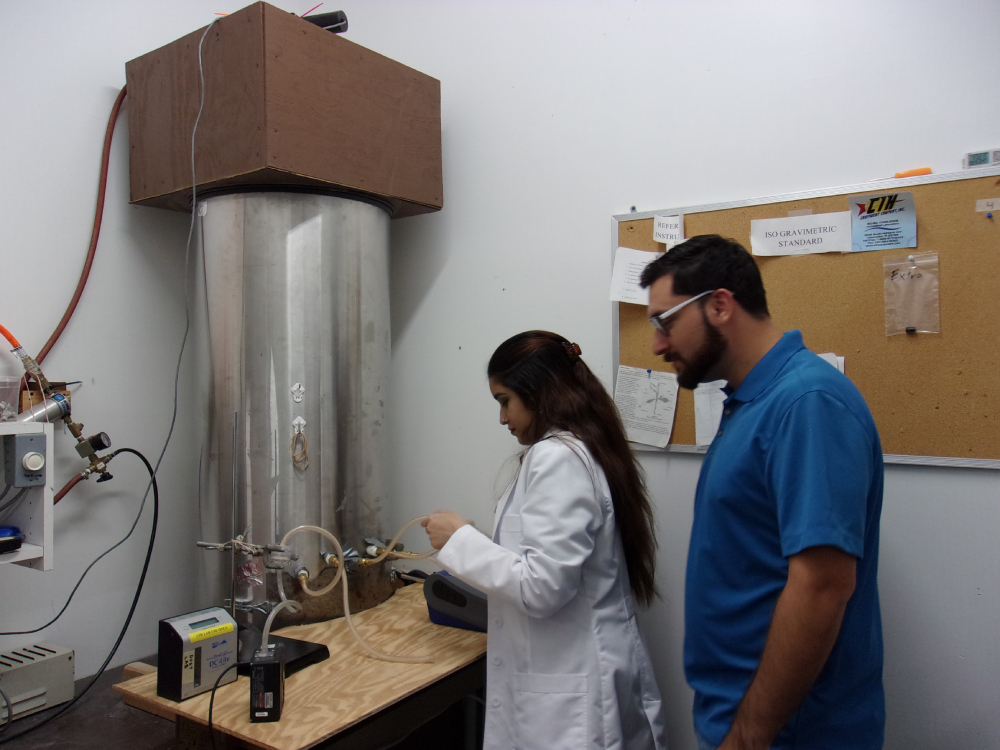
Our technicians check the flow rate of the calibration gas and verify that the gas concentration matches the expected levels.
//
Managing a wide range of sensors requires a strict schedule. Use the table below to understand the standard requirements for common testing equipment used in the oil and gas sector.
Sensor Type | Common Threat | Recommended Calibration Frequency | Typical Life Expectancy |
LEL (Lower Explosive Limit) | Methane, Pentane | Every 3 to 6 months | 2 to 4 years |
Oxygen (O2) | Deficiency or Enrichment | Every 6 months | 1 to 2 years |
Hydrogen Sulfide (H2S) | Potential hazardous toxic gas | Every 3 to 6 months | 2 years |
Carbon Monoxide (CO) | Combustion byproduct | Every 6 months | 2 to 3 years |
Fleet Management with the Tracefii Portal
Large-scale operations in the Permian Basin or the Eagle Ford Shale often struggle to track the expiration date for hundreds of units. CIH Equipment simplifies this with our Tracefii portal. This system automates your compliance schedule, providing a clear function utility for safety managers.
You can view instrument calibration records and download certificates for all your portable gas detectors in one place.
//
Understanding the difference between calibration and bump testing is necessary for daily safety. We recommend that your team perform a bump test before every shift. A bump test verifies that the sensors and alarms are functional by exposing the unit to a known gas concentration. It does not, however, adjust the accuracy of the device.
A full calibration is a more involved process. Our technicians calibrate gas detectors by adjusting the internal settings to match a primary standard. This corrects for sensor drift caused by corrosive gases or high levels of humidity.
We provide documented unbroken chains of traceability to the National Institute of Standards and Technology.
ISO 17025:2017 Accredited Excellence
CIH Equipment is an ISO 17025:2017 accredited laboratory. This accreditation proves our technical competence and the reliability of our calibration services. We treat every example detector with the same precision, whether it is a single-gas H2S monitor or a complex multi-gas unit.
Our process includes flow cleaning and sensor health evaluations. If an instrument is tested and calibrated but shows signs of failure, we provide H2S sensor replacement or other repairs to restore measurement accuracy. We know that equipment failures lead to costly work stoppages. Our goal is to return your tools to the field quickly without compromising safety.
//
A bump test is a daily check to confirm the sensor reacts to gas and the alarms work. A calibration is a full adjustment performed in a lab or via a docking station to confirm the device provides accurate readings against a known standard. Both bump tests and regular calibrations are needed for compliance.
Most manufacturers and safety regulations require a full calibration every 3 to 6 months. However, if your equipment is exposed to high levels of corrosive gases, you may need more frequent gas detector calibration to account for sensor fatigue.
If we evaluate monitor performance and find the H2S sensor is unresponsive, we perform an H2S sensor replacement. Sensors have a limited life span and can be poisoned by certain chemicals. Replacing the sensor is often more cost-effective than buying new equipment.
All customers have access to our Tracefii portal. This tool tracks the expiration date and history of every unit we service. It is designed to help you pass audits by providing an unbroken chain of calibrations at the click of a button.
Request a Quote Today
//Do not leave your site safety to chance. Trust the experts at CIH Equipment for your oil and gas detector calibration needs. We provide the speed and precision required for the most demanding industrial environments in the country.
Request a quote today to secure your compliance schedule.