
//
Safety managers and industrial hygienists across the Lone Star State depend on accurate acoustic data to stay compliant with OSHA and local noise ordinances. Sound Level Meter Calibration in Texas provides the technical verification needed to prove that your hardware performs within specific tolerances.
From the heavy manufacturing plants in Houston and the refineries in Beaumont to the tech hubs in Austin and the oil fields of the Permian Basin, CIH Equipment delivers NIST-traceable results that withstand regulatory audits.

//
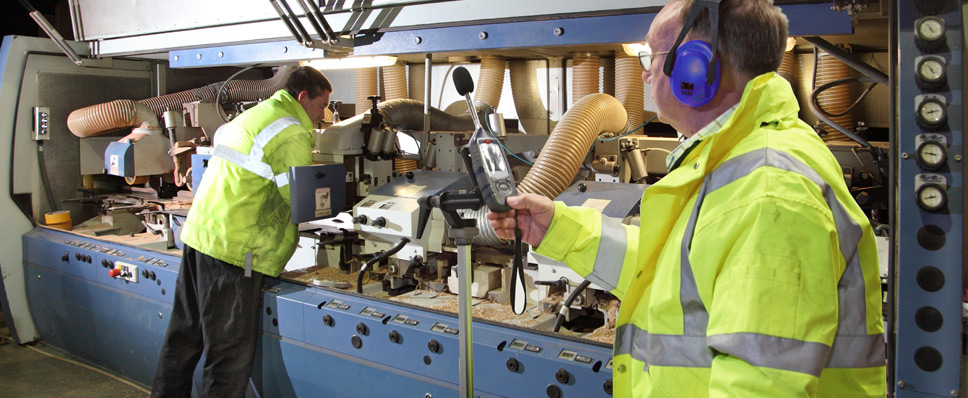
Sound Level Meter Calibration in Texas is a technical requirement for any professional managing a hearing conservation program. Your sound level meter calibration needs to be performed in a laboratory environment to account for microphone sensitivity and electronic drift.
Whether you are monitoring property line noise in Dallas or workplace exposure in San Antonio, using a calibrated decibel meter is the only way to verify your data is defensible.
Our lab provides precise calibration for a wide range of measurement equipment. We understand that field conditions in Texas, like the high heat and humidity near the Port of Houston, can affect your equipment.
Regular service prevents the risk of using a calibrated noise meter that provides false readings. Inaccurate field readings lead to incorrect safety decisions and potential legal liability.
//
CIH Equipment maintains high-quality standards to help you avoid audit failures. Our facility is ISO/IEC 17025:2017 accredited, which means our processes meet international requirements for laboratory competence. When you send your sound level meter to us, you receive documentation that proves NIST traceability. This paperwork is a requirement for most state and federal safety inspections.
We do more than just check the battery. Our technicians test the physics behind the sound. We verify your calibrated SPL meter across various frequencies and pressure levels.
This rigorous testing matches the standards found in ANSI S1.4 and IEC 61672. We check:
- Sound Pressure Level: Verification at standard reference points like 114 dB.
- Frequency Response: Testing how the microphone handles different pitches.
- Linearity: Confirming the meter stays accurate as volume increases.
- Time Weighting: Checking that Fast and Slow settings react at the correct speed.
//
Texas has a massive industrial footprint that requires specialized calibration capabilities. Downtime costs money and stalls projects. We prioritize customer service and efficiency to get your equipment back to the job site quickly. Our services include support for noise dosimeters, vibration analyzer units, and acoustic calibrators used throughout the state.
We also provide Casella CEL-120/2 service for teams using that specific hardware. By consolidating your sound level meter calibration and other instrumentation needs with CIH Equipment, you simplify your equipment management. We help you stay ahead of calibration cycles, so your team is never stuck with expired certificates during a surprise inspection.

//
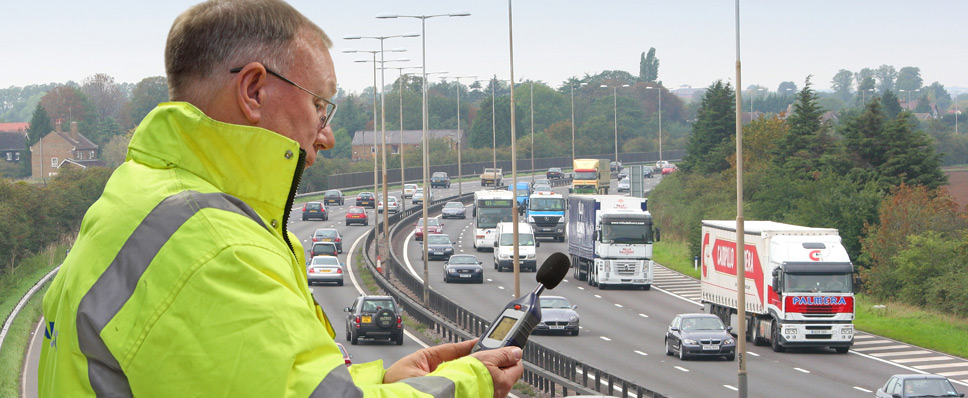
A sound level calibrator used in the field is useful for daily checks, but it does not replace a full lab certification. Over time, microphones degrade and diaphragms lose tension. If your sound meter calibration is off by just 2 dB, a safe work zone might be incorrectly labeled as hazardous, or vice versa.
Professional measurement equipment verification resets your device to a known standard. This protects your workers from hearing loss and protects your company from regulatory fines.
Whether you are working on a construction site in Fort Worth or a manufacturing floor in El Paso, precision is your best defense.
//
How often should I schedule sound level meter calibration in Texas?
Most manufacturers and safety standards recommend annual calibration. However, if your equipment is exposed to extreme Texas heat or high-dust environments, you may need to check it every six months.
What is the difference between Class 1 and Class 2 meters?
Class 1 meters are precision instruments used for laboratory work or legal enforcement. Class 2 meters are general-purpose tools used for most industrial noise surveys. Both require periodic lab verification to stay accurate.
Is NIST traceability included with my service?
Yes. Every calibration comes with a certificate that documents NIST traceability. This proves your measurements are linked to national standards.
Do you calibrate sound level calibrators as well?
Yes. We calibrate the field calibrators used to check meters. If your field check device is wrong, your daily field readings will be invalid.
What is your typical turnaround time for Texas customers?
Regardless of where the equipment is located, our standard turnaround time is 7-10 business days, and we offer rush service.
Get a Quote from CIH Equipment
//Keep your safety program compliant and your data accurate. CIH Equipment is ready to handle your Sound Level Meter Calibration in Texas with professional precision and ISO/IEC 17025:2017 accredited quality.