
Accurate sound measurement is at the heart of workplace safety, environmental monitoring, and regulatory compliance. When your sound level meter is properly calibrated, you are not just collecting data; you are protecting employees, avoiding compliance issues, and maintaining a reputation for operational excellence.
This guide breaks down what sound level meter calibration means, the specific tests involved in ANSI S1.4 compliance, and why professional calibration is critical to reliable acoustic measurements.
//
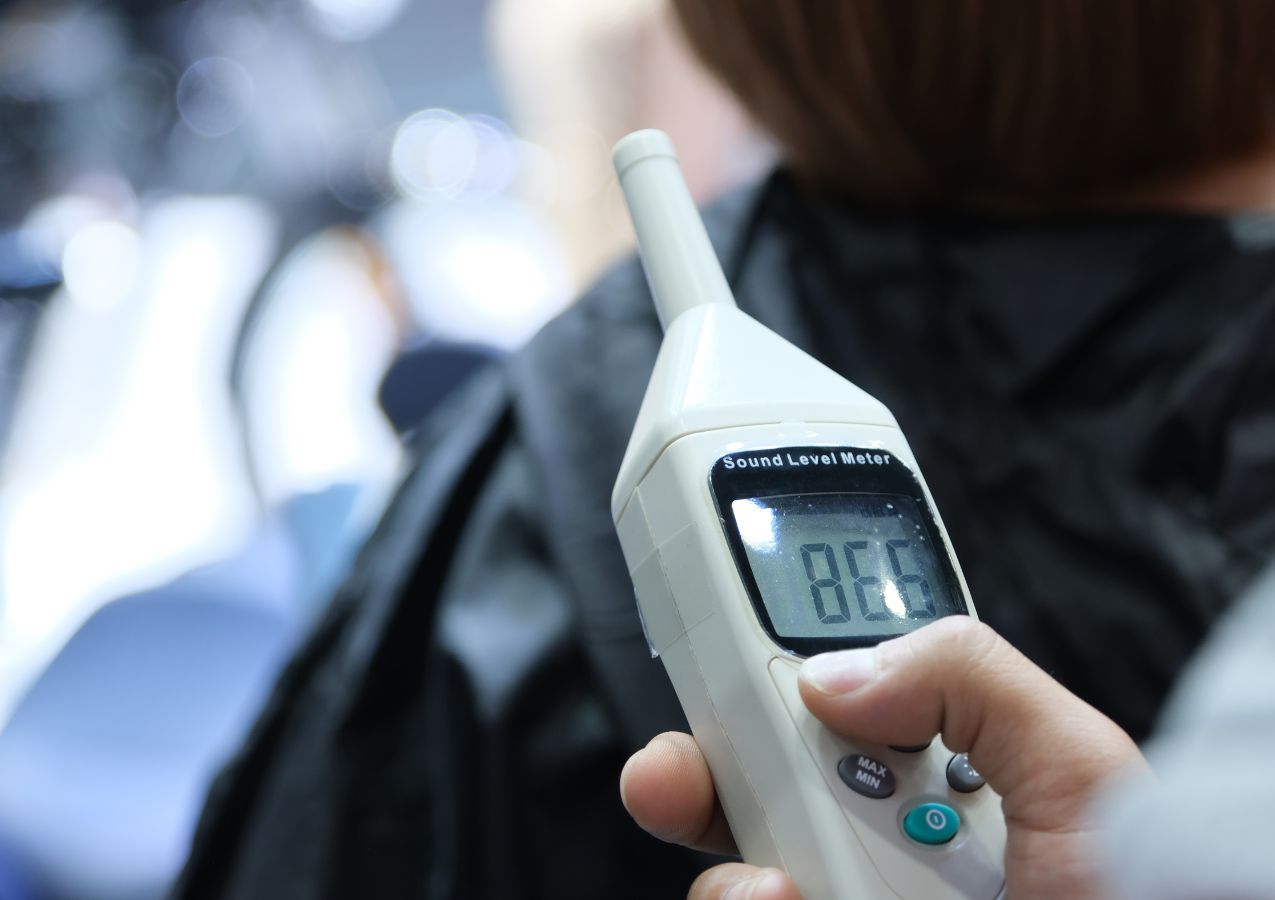
Sound level meter calibration is the process of comparing your instrument’s readings to a known reference standard to confirm accuracy. Think of it as a “check-up” for your equipment, ensuring it responds correctly to various sound frequencies and pressure levels, just as the manufacturer intended.
During calibration, trained technicians use precision acoustic calibrators that emit controlled, stable sound levels. They measure how your instrument responds, identify any deviations, and make adjustments as needed. This ensures your readings remain dependable when making important decisions about workplace noise exposure or environmental sound levels.
Calibration is a detailed evaluation of the entire instrument—from the microphone and preamp to the processing circuits. Every component must work together to deliver accurate data across the frequencies you rely on most.

//
The American National Standards Institute (ANSI) developed the S1.4 standard to define how sound level meters should perform. It is the benchmark for accuracy, frequency response, and environmental tolerance.
Under this standard:
- Type 1 meters: Precision-grade instruments designed for laboratory or research use, offering the tightest tolerances (e.g., ±0.7 dB at 1000 Hz).
- Type 2 meters: General-purpose tools, ideal for fieldwork, industrial hygiene assessments, and compliance checks (typically allowing ±1.0 dB).
//
To ensure full compliance with ANSI S1.4, CIH Equipment goes beyond basic functionality checks. We perform a rigorous suite of electrical and acoustic response tests to verify that your meter handles complex noise environments correctly.
Our specific ANSI S1.4 testing capabilities include:
- A-Weighting Network Test (Electrical Response): We verify the A-weighting filter, which mimics the human ear’s response to sound. This is critical for OSHA compliance and assessing risk to human hearing.
- C-Weighting Network Test (Electrical Response): We test the C-weighting filter, which provides a flatter response. This is essential for measuring peak sound pressure levels and low-frequency noise often generated by heavy machinery.
- Input Amplifier Test (Gain Test / Attenuator Setting): We test the linearity of the instrument’s amplifier. This ensures that the meter remains accurate regardless of whether you are measuring a quiet library or a loud industrial floor, and that changing range settings does not introduce error.
- Fast-Slow Time Weighting Test: We verify the instrument's time constants. "Fast" response (125ms) tracks fluctuating noise, while "Slow" response (1s) averages sound for consistent readings. Both must meet precise timing standards to provide valid data.
- RMS Detector Test (Crest Factor Test): We test the meter's ability to handle impulsive sounds (spikes in noise). The Crest Factor test ensures the Root Mean Square (RMS) detector is accurate even when the noise signal has high peaks relative to the average energy.
//
Accurate sound measurement is the foundation of hearing protection and workplace safety. When your sound level meter is properly calibrated, you achieve three key goals:
- Hazard Identification: You can identify hazardous noise levels before they cause permanent hearing damage.
- Regulatory Compliance: You meet OSHA’s hearing conservation standards, which require action when workers are exposed to 85 dBA or higher over eight hours.
- Risk Mitigation: You protect your business from fines, liability, and costly claims tied to inaccurate or missing data.
Proper calibration also provides defensible data during audits or litigation. If an incident occurs, being able to show that your instruments are maintained and calibrated to recognized standards makes a critical difference.

//
At CIH Equipment, we handle calibration for the full range of acoustic measurement devices, including:
- Noise Dosimeters: For personal noise exposure tracking throughout a work shift.
- Sound Level Meters: From simple Type 2 meters to advanced Type 1 analyzers.
- Acoustic Calibrators: Reference tools that must be verified as the foundation of your field checks.
- Microphones: Sensitive components that require testing for humidity and pressure sensitivity.
- Specialized Instruments: Including sound intensity probes, environmental noise monitors, and building acoustics analyzers.
//
The calibration process starts with a visual inspection and a quick check of your meter’s basic functions. Once the instrument passes this initial assessment, formal testing begins.
We offer three calibration options to suit your needs:
- 6-Point Calibration: Covers the essential frequencies for basic compliance verification.
- 9-Point Calibration: Adds more data points for increased precision.
- 20-Point Calibration: A full-spectrum evaluation for the highest level of accuracy.
If adjustments are needed, our technicians fine-tune the instrument, whether through digital firmware settings or component-level repairs for analog models. Once complete, you receive a comprehensive calibration certificate documenting test results, environmental conditions, and traceability to NIST standards.
//
While regulations like OSHA do not always set a strict timeline, most professionals recommend annual calibration. This schedule balances cost with confidence.
- Heavy use in industrial environments.
- Exposure to extreme temperatures or humidity.
- Physical shocks (drops or impacts).
- Two instruments give noticeably different readings on the same source.
- It fails a quick field check using an acoustic calibrator.
- You see error messages, unstable displays, or abnormal battery drain.
Ensuring Measurement Excellence
//Maintaining calibration compliance is part of a larger safety and quality commitment. By following ANSI S1.4 standards and ensuring your specific weighting networks and detectors are functioning correctly, you ensure every reading you take is trustworthy.
Don’t wait for equipment drift to compromise your data.
Contact CIH Equipment today to schedule your next calibration and keep your sound measurement program in full compliance.